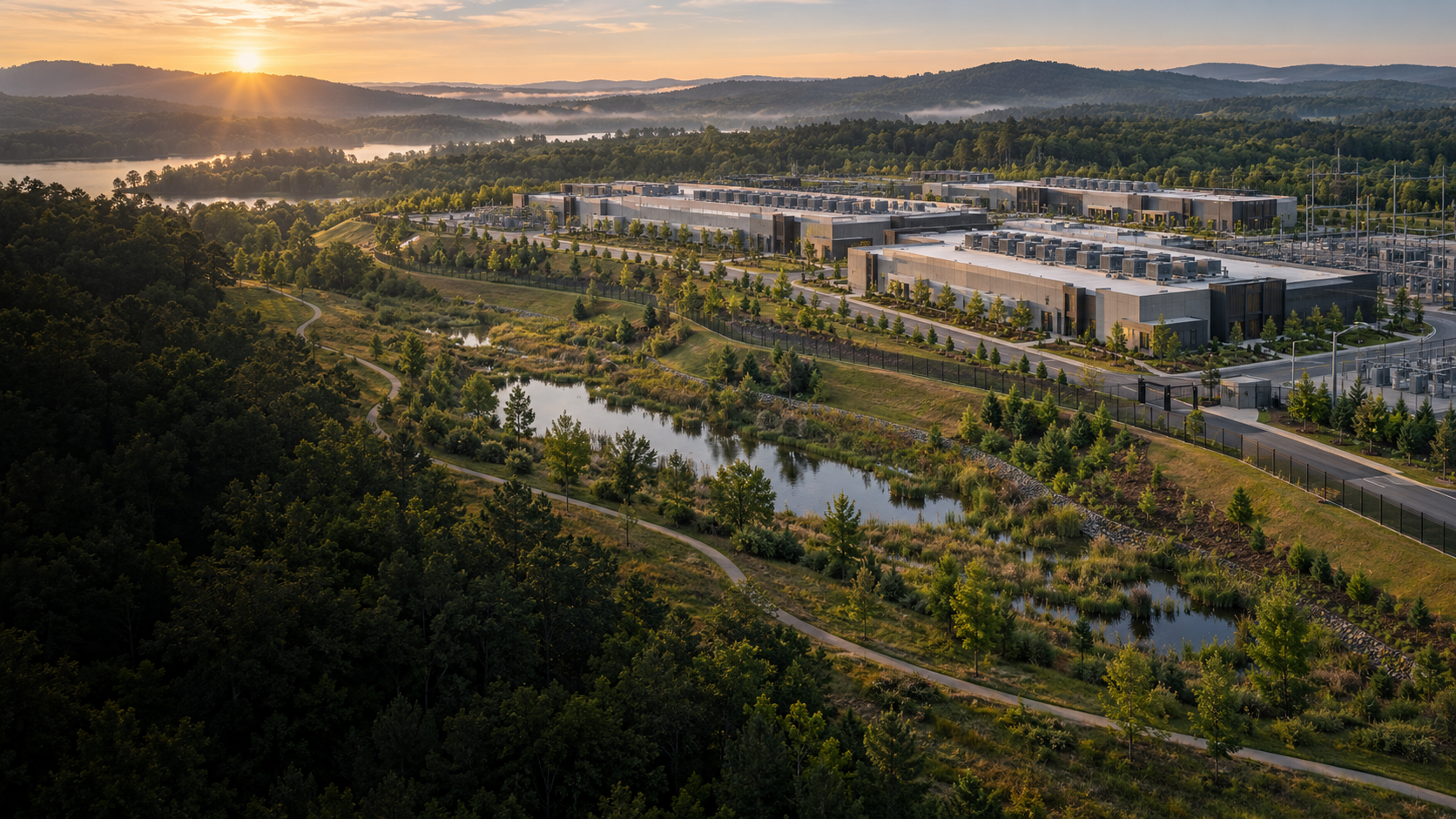
Illustrative concept of a data-center campus with native woodland and stormwater landscapes

Community-compatible data center development

Identify site and community risks
while choices are still open.

Cornerstone helps owners, developers and mission-critical delivery teams identify human, property, acoustic, ecological, utility and governance risks early—then coordinates credible pathways forward.

GeorgiaNorth CarolinaSouth Carolina

Technical feasibility is only part of project readiness.

Earlier visibilityIntegrated decisionsVerifiable commitments

One site. One decision owner.

Start with a decision that better evidence can improve.

Tell us the site, project stage and decision you need to make. We first review fit and missing inputs, then propose a written diagnostic scope. Fees, timing, exclusions and review criteria are agreed before work begins.

A deeper or sponsored pilot may be considered separately. No client, specialist partnership, sponsorship or government endorsement is implied. Public-sector engagements require an appropriate procurement path.

Discuss your site's diagnostic scope →

The overlooked project interface

Critical risks often sit between capable teams.

Engineering, real estate, construction, legal, communications and public affairs may each perform well—yet no single team owns the full relationship between a facility and the place around it.

Cornerstone creates that integrated view before design assumptions harden, public positions form or commitments become difficult to change.

See where we engage
COne integrated
decision view
AcousticsUtilitiesLand use EcologyPropertyPublic trust

How we help

A disciplined path from uncertainty to action.

Start narrowly. Expand only when the evidence and project need support it.

02

Community Benefits and Implementation Plan

After the diagnostic, connect conceptual alternatives and resident priorities to specialist work, supported costs and accountable delivery.

  • Site and community alternatives
  • Funding and maintenance responsibilities
  • Measurable commitments and implementation steps
Separate written scopeFees and timing by scope
Discuss implementation planning
03

Ongoing Commitment Tracking

Keep funded commitments, evidence, dependencies and unresolved concerns visible through an agreed reporting cycle.

  • Commitment and evidence register
  • Progress and exception reporting
  • Corrective-action follow-up
Separate written scopeFees and timing by scope
Discuss commitment tracking

The current entry offer is one Site Compatibility Diagnostic. All ranges are preliminary planning figures, not quotes; demand, technical feasibility, final pricing and the proposed delivery window remain unverified until supporting evidence exists. Inputs, delivery dates, fees and exclusions require an agreed written scope. Deeper pilots and ongoing advisory require separately agreed scope, specialist costs and delivery assumptions. Engineering, measurements, permitting advice and contractor pricing require separate specialist work. Approval, community support and mitigation performance are not guaranteed.

The Cornerstone Site Compatibility Framework

Five lenses. One defensible decision.

Each lens turns scattered concerns into evidence, choices, accountable owners and measurable next steps.

01

Place

Property interface, land use, visual character, access and adjacent communities.

Site fit
02

Systems

Power, water, wastewater, stormwater, transportation and resilience dependencies.

Capacity
03

Experience

Noise, vibration, lighting, construction effects, landscape and ecological performance.

Impact
04

Process

Disclosure timing, stakeholder participation, procedural readiness and decision chronology.

Trust
05

Commitments

Named owners, measurable outcomes, funding, due dates and verification methods.

Accountability
Evidence you can trace. Commitments you can check.

Each material finding identifies its source, review date, evidence status and next verification step. Each proposed commitment records an owner, baseline, metric, target, reporting interval and corrective trigger. Technical thresholds require the responsible specialist’s validation.

Clients receive the project-specific work product defined in their engagement. Rights to reusable tools and templates are defined in written terms.

DCAC licensing concept: A separate proposed evidence-assurance initiative remains under development. It is not a government program, adopted standard or mandatory certificate. Any future license requires agreed rights, quality controls, evidence responsibilities, conflict safeguards and legal review. Cornerstone does not independently certify its own recommendations.

What better integration creates

Not a guaranteed approval.
A better-informed project.

Cornerstone does not promise permits or eliminate opposition. We help project teams surface material issues early, evaluate responsible options and make decisions they can explain.

01

Fewer late surprises

Identify avoidable redesign, schedule and trust risks while options remain open.

02

Clearer accountability

Connect each recommendation and commitment to an owner and verification method.

03

Stronger decisions

Separate facts, assumptions, specialist findings and executive choices.

04

Credible local value

Translate community-benefit ideas into specific, measurable and fundable commitments.

Better projects begin with legitimate questions

Benefits people can verify.
Tradeoffs teams can explain.

Listening should change the project when evidence calls for it. Our proposed approach connects community concerns to alternatives, responsible specialists and a visible record of decisions. It cannot guarantee support.

Power and cost responsibility

Ask who funds upgrades, how load ramps up and what happens if demand changes. Utility capacity, tariffs and contracts require utility and qualified review; no household-bill outcome is promised.

Water and cooling choices

Compare peak and annual demand, drought constraints, cooling alternatives and suitable reuse. Reverse osmosis adds energy, reject-stream and maintenance questions. Water specialists must validate local feasibility.

Noise, views and runoff

Connect receptor-based acoustic studies with equipment placement, setbacks and engineered controls. Native screening and stormwater landscapes need design and maintenance; trees alone are not assumed to control sound.

Emergency and construction readiness

Coordinate operator and fire-service pre-incident planning for the actual equipment, including battery storage where present. Review access, traffic, generator operations and response resources with responsible authorities.

Local income and access to work

Separate construction jobs from permanent jobs. Evaluate actual supplier contracts, paid training and shift transportation. Test net fiscal benefits after incentives and service costs; count real hires, retention and payments rather than promises.

Housing, dignity and resident choice

Explore voluntary housing and hardship support through qualified programs. Let residents help set priorities, protect personal information and consider displacement risks. Receiving assistance must not depend on supporting a development.

Benefits that last

Identify maintenance funding, delivery owners and what happens if construction is delayed, the campus changes hands or operations end. Trails, education and resilience programs need access, operating agreements and a realistic long-term budget.

Accountability after the meeting

Record concerns, alternatives, owners, measures and corrective actions. Show unresolved issues and cumulative impacts from neighboring projects. Closing an action does not imply resident agreement.

From a concern to a checkable commitment

Illustrative water question — not a finding for any named site
ConcernEvidence and alternativesOwner and verification
Could summer demand compete with nearby users?Obtain utility capacity, peak demand and drought assumptions. Compare cooling and suitable reuse with the engineer.Utility and water specialist confirm the evidence; developer approves costs. Define metered demand, thresholds and corrective response before making a promise.

Every implementation recommendation needs site evidence, specialist validation, supported costs and an accountable decision owner. Additional benefits do not replace required mitigation or resolve an unsupported safety, water, noise or property concern. Pause or reconsider the site when necessary conditions are not met. No job, housing, savings or health outcome is guaranteed.

Public evidence behind this approach · source review October 7; contact and resource update October 21, 2026

This is a dated, focused source review. Requirements vary by site and must be refreshed before external advice. These sources do not endorse Cornerstone.

Founder & Principal

Susan Carter, MBA

Susan brings more than two decades of underwriting, risk assessment, operations and stakeholder translation to complex infrastructure decisions. Her role is to connect disciplines, surface blind spots and help clients move from fragmented information to responsible action.

MBA, Risk Management · BA, Economics · Southeast-based

“Growth with people,
not growth at people.”
Independent integration. Appropriate expertise.

Cornerstone coordinates multidisciplinary analysis but does not replace licensed legal, engineering, environmental, appraisal, brokerage, insurance or acoustic professionals. Technical conclusions remain with the qualified specialist responsible for that scope.

Start with one site

Where might hidden friction become preventable risk?

Request a 20-minute introductory conversation about one active or planned project in Georgia, North Carolina or South Carolina.

✓ No-cost introductory conversation✓ No confidential documents required✓ Clear fit—or a candid referral

This form prepares an email; the website does not receive messages directly. Preparing or copying an inquiry does not send it. Open your email app and press Send to contact us.

Include only a brief overview. Please do not include confidential documents, payment details or sensitive personal information. Your entries are not stored by this form.

Email directly: info@cornerstoneinfrastructureadvisory.com

A controlled test on October 16, 2026 reached both receiving inboxes. This is one successful test, not a guarantee for every message. Preparing an inquiry does not send it or confirm delivery. If you do not hear back, check your spam folder or email us directly.